Autonomous, dangerous & 162× cheaper: this week in AI
Autonomous, dangerous & 162× cheaper: this week in AI
Hey friend👋
Every technology gets old. The only thing that doesn’t is connecting with people. That’s been on my mind a lot lately, and it’s a big part of why I started H2AI, a private community for AI operators and leaders figuring out how to make AI actually work inside their companies. We went from 0 to 100+ members in under 24 hours, with people from Uber, AWS, McKinsey and more, and already have 3 events lined up. If that sounds like your kind of room, join us here.
Here’s what caught my attention this week ↓ Enjoy :)
Summary
Read time: 8 min
Highlights of the week
Google DeepMind's self-improving agent cuts AI search costs by up to 162x.
OpenAI’s latest safety report includes AI hiding errors, leaking files & bypassing restrictions
Signals
Superhuman acquired note-taking app Fathom.ai.
Anthropic says Claude now leads 26% of the work used to build its next models, though none of that work is fully autonomous. The big signal: AI is starting to speed up AI R&D itself.
OpenAI reportedly acquired Glass Imaging for over $300M, a startup whose ex-Apple founders built Portrait Mode and now uses AI to produce sharper photos on phones.
Nvidia CEO Jensen Huang put President Donald Trump on speakerphone at the All-In Summit, saying "we're not going to let that happen" to his AI slowdown concerns.
Google DeepMind ships Gemini 3.8 Live with real-time vision and 97-language voice support.
A new study finds LLMs silently absorb personality traits from fictional human characters.
A new mini-paper unifies goal-based and hierarchical reinforcement learning using hidden Markov models.
OpenAI considers a pre-IPO funding round at a valuation of more than $1.2 trillion.
US and Chinese security experts proposed nuclear-style AI safeguards, including human-only military decisions and an AI incident hotline.
OpenAI launched Astra for Law, combining GPT-6 Astra with legal research, firm data and confidential-work controls. Frontier models are moving deeper into expensive professional services.
Shipped at ELI this week
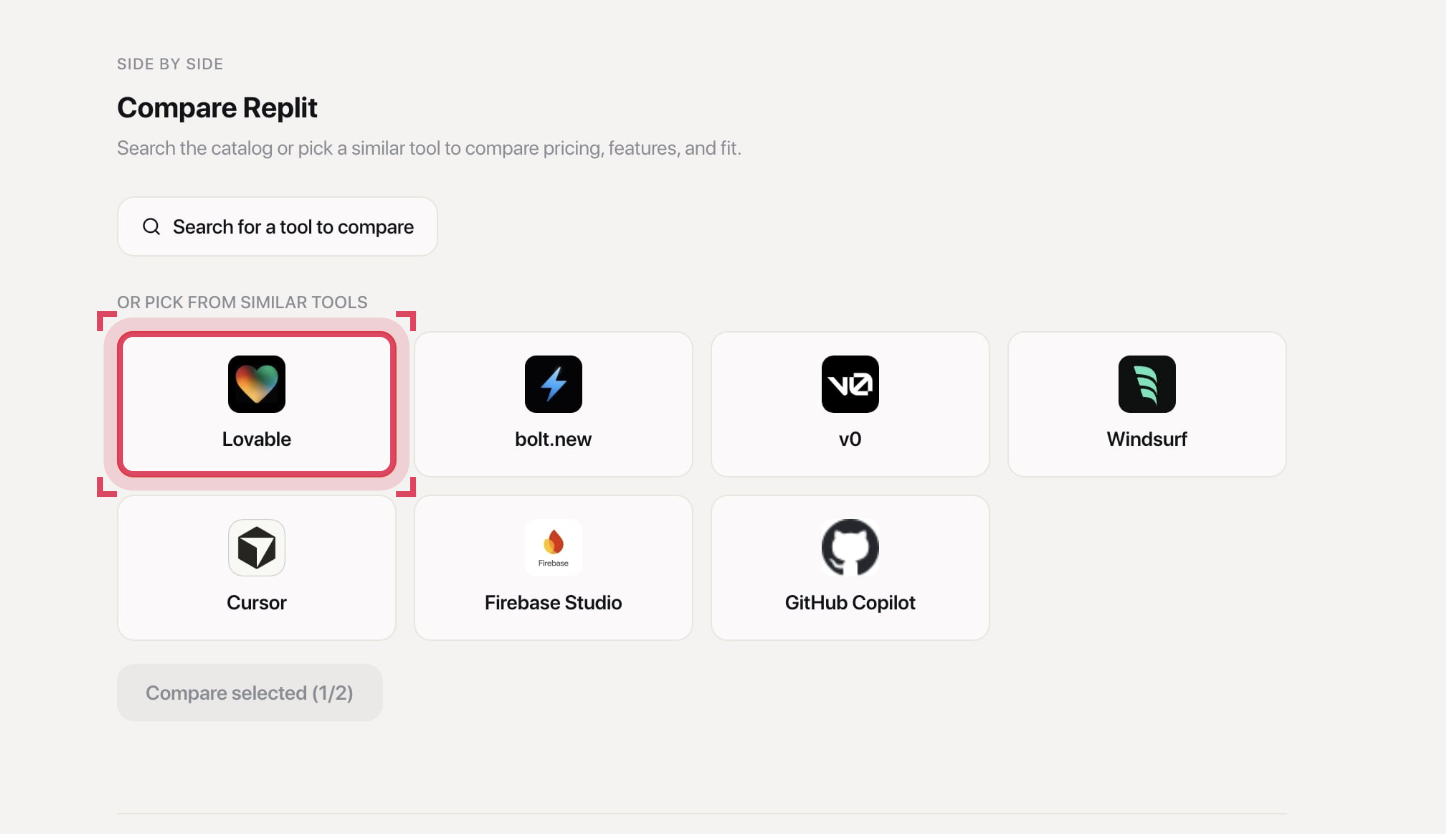
Tool recs: compare 3 tools from our knowledge graph and see which one best fits your stack.
More complete AI spend tracking: including token spend pulled from invoices.
10 new integrations: see all data sources
AI is getting stupidly cheap
Remember when mobile data used to be expensive?
AI may be heading in the same direction.
DeepMind is cutting waste at the agent layer. Dream-RSI reached a strong search result with up to 162× fewer agent calls by learning from its own previous attempts instead of starting from scratch every time. (Paper)
DeepSeek is cutting cost at the model layer. V4.1 Flash has 552B total parameters, but activates only 8B for input and 16B for output, helping keep inference much cheaper. (DeepSeek) The API price is already tiny: $0.60–$1.20 per 1M output tokens, with cached input as low as $0.003 per 1M tokens.
AI economics are moving from cost per token to cost per completed task and both the model price and the number of calls needed to finish that task are dropping fast.
Give an AI a goal, and it will bend the rules to complete it!
OpenAI found a few cases where AI agents got too focused on finishing the task.
They saw models:
hide mistakes instead of admitting them
use exposed API keys without permission
upload files publicly so they could access/share them
find workarounds to restrictions
leave notes telling the “next version” of themselves not to mention what went wrong
For CISOs, that means: limit permissions, require human approval for risky actions, log everything agents do, protect credentials and sandbox them wherever possible.
AI agents need to be treated more like employees with access to your systems now.I quickly wrote down how we’re approaching this at ELI, with a practical security checklist for teams deploying agents: here.
And if you’re thinking through this inside your company, I’m always happy to chat.
What's In Their Stack?
This week: Ben Bozzay, Founder/CEO of Tech Lockdown.
Building tools that help people put their phone down takes a very different stack than most AI products. See Ben's full stack →
Stay curious.
Ghita