Outcome > headcount. Why your stack isn’t ready
Investors stopped paying for 30 years of cash flow. AI killed the multiple. If you don't know why, read this...
Hello from South Africa,
One episode I consumed this week that stuck with me from the All-in podcast where Gerstner, Sacks, Friedberg, and Calacanis put words to something I've been watching happen in real time:
Investors aren't paying for 30 years of future cash flow anymore. There's too much uncertainty about which software companies will even exist in 7 years. AI makes everything harder to price.
David Friedberg said: software is moving from helping us be more productive to actually completing the work. That's a business model shift. You can't charge per seat when the seat is an AI agent. The future is outcome-based pricing: charging for value delivered, not human headcount.
Which brings me to what I've been obsessing over at TechBible. If the future is agents completing work instead of humans using tools, then your infrastructure choices today determine whether your agents can actually function tomorrow. That's why I built ELI, our Enterprise Intelligence Layer methodology. It maps your entire tech stack to show you which tools are positioned to support agentic workflows and which ones are just... sitting there, collecting dust and burning cash.
What's actually happening in the market
Capital One acquired Brex at a steep discount. Google hired the Hume AI team. Apple bought Q.ai. These aren't growth plays, they're admissions that after billions in R&D, the giants still can't build what startups figured out in 18 months :P
Speed is beating resources. But the real bottleneck isn't models or interfaces. It's memory.
Google just released something called Nested Learning to stop AI from forgetting what it learned. Alibaba built a benchmark for models that can handle hundreds of steps without losing the thread. Every AI agent today hits a wall around step 50. Whoever cracks long-term context without hallucinations wins this race.
Secure or Not ? Here I come
I don't want to be dramatic, but we need to talk about this. Anthropic just published research showing that even benign fine-tuning can accidentally break AI safety. And last week, researchers hacked Moltbook's database in 3 minutes—accessing thousands of private emails.
If your AI agent can access private data and you haven't solved for security architecturally, you don't have a product. You have a liability waiting to happen. The first major breach will kill half the startups in this space.
Here are top 3 security tools for agents companies are adopting on Techbible this week:
3 bets on the future
Right now, three different strategies are playing out:
Google is betting on emotionally aware voice interfaces with the Hume acquisition. Expect Gemini's voice mode to get unsettlingly human by Q3.
xAI is betting on human emulators for legacy UIs—automating the 90% of office work trapped in systems companies can't rip out.
OpenAI is betting on repeatable automations with their new Codex app for scheduling and delegating work.
These aren't competing strategies. They're different markets. Voice wins consumer. Automation wins enterprise. Emulators win the messy middle where Fortune 500 companies are stuck with 30-year-old ERP systems. Probably all 3 will win. But in different categories.
Some good news for developers
Anthropic released MCP Apps—you can now build live UIs inside the chat instead of toggling between code and interface.
Moonshot open-sourced Kimi Code, an agent for autonomous coding across entire codebases.
And Luma made high-fidelity video generation cheap enough to actually use.
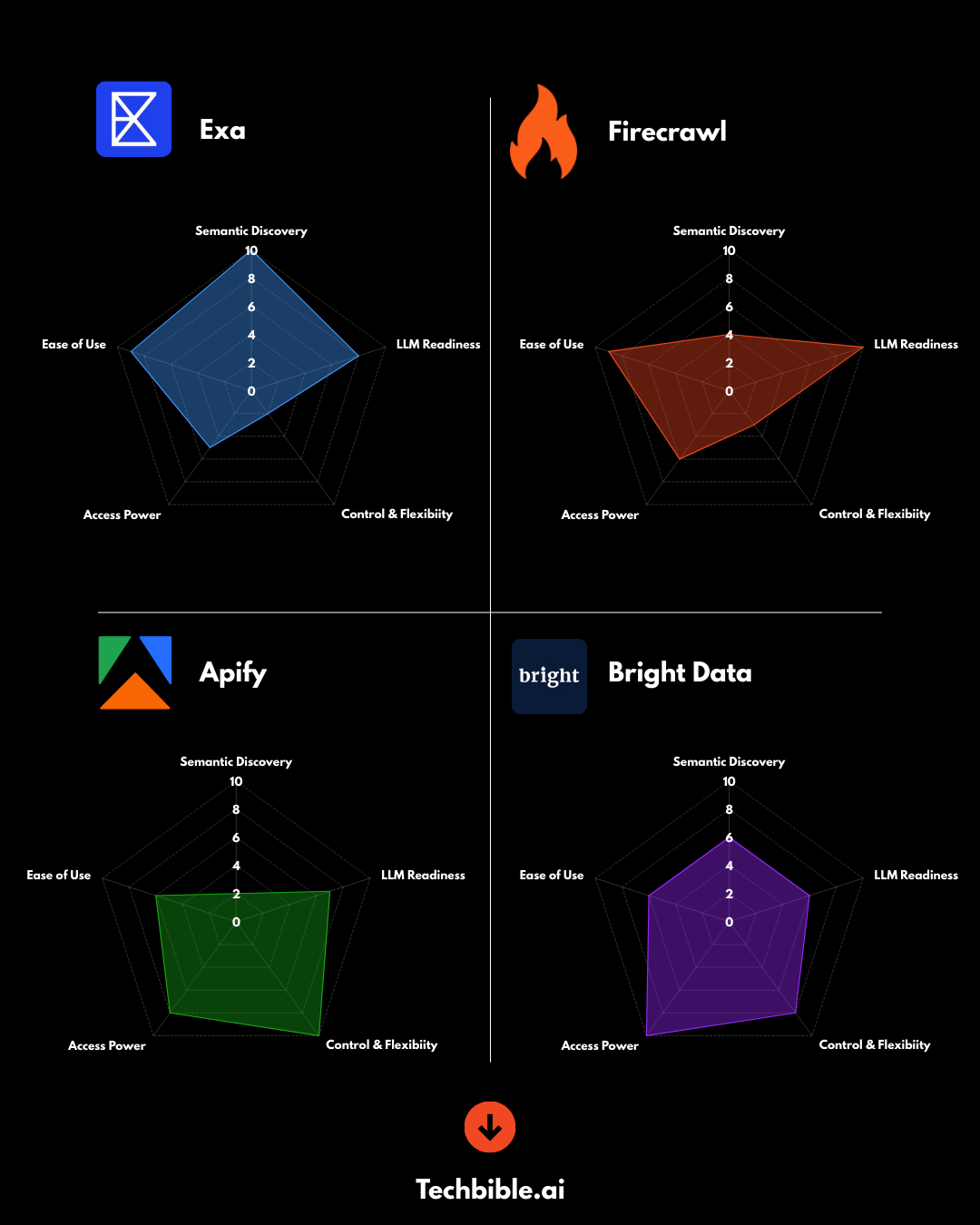
If you're building agents that need to pull data from the web, this will save you weeks. I just compared the best web scraping tools for AI workflows.
Stay curious.
From Cape Town, Ghita