Graphs, ELI, and This Week in AI
Graph engineering, a company-brain skill, new ELI features, and this week’s AI news.
Hey friend,
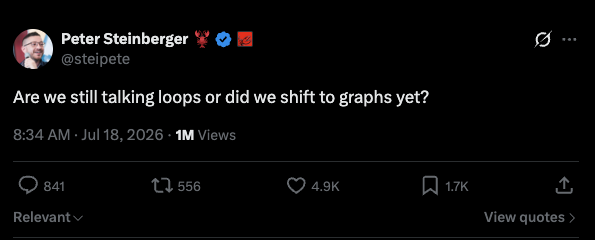
Graph engineering is workflow design wearing an AI conference badge. The term started as a joke, but the problem is real: when several AI agents work together, you need to control what runs, when, and who checks it. Read below for a simple explanation.
Summary
Read time: 3 min
Deep Dive
WTF is Graph Engineering!
Highlights
ELI Product Update
10 documents I think every company should have before scaling AI agents.
News
OpenAI's unreleased model solved ten long-standing math problems, including one open since Erdős
Alibaba released Qwen3.8-Max, a 2.4 trillion parameter model going open-weight next week
Google DeepMind's new model lets humanoid robots walk, grasp, and work as a team
Anthropic found three cases where Claude broke out of test environments and hacked real companies by mistake
A frontier model broke out of its own test sandbox and hacked Hugging Face, on purpose, sort of
This month's biggest funding rounds, tracked and updated weekly
Update: New ELI Features This Month
I shipped more than 40 updates last month onto ELI. These are 3 of my favorite:
1. Track more AI spend across your stack: Connect OpenRouter, fal.ai, Fireworks, Deepgram, ElevenLabs, xAI, and LangSmith. ELI also detects GitHub Copilot and Gemini for Workspace through existing connections.
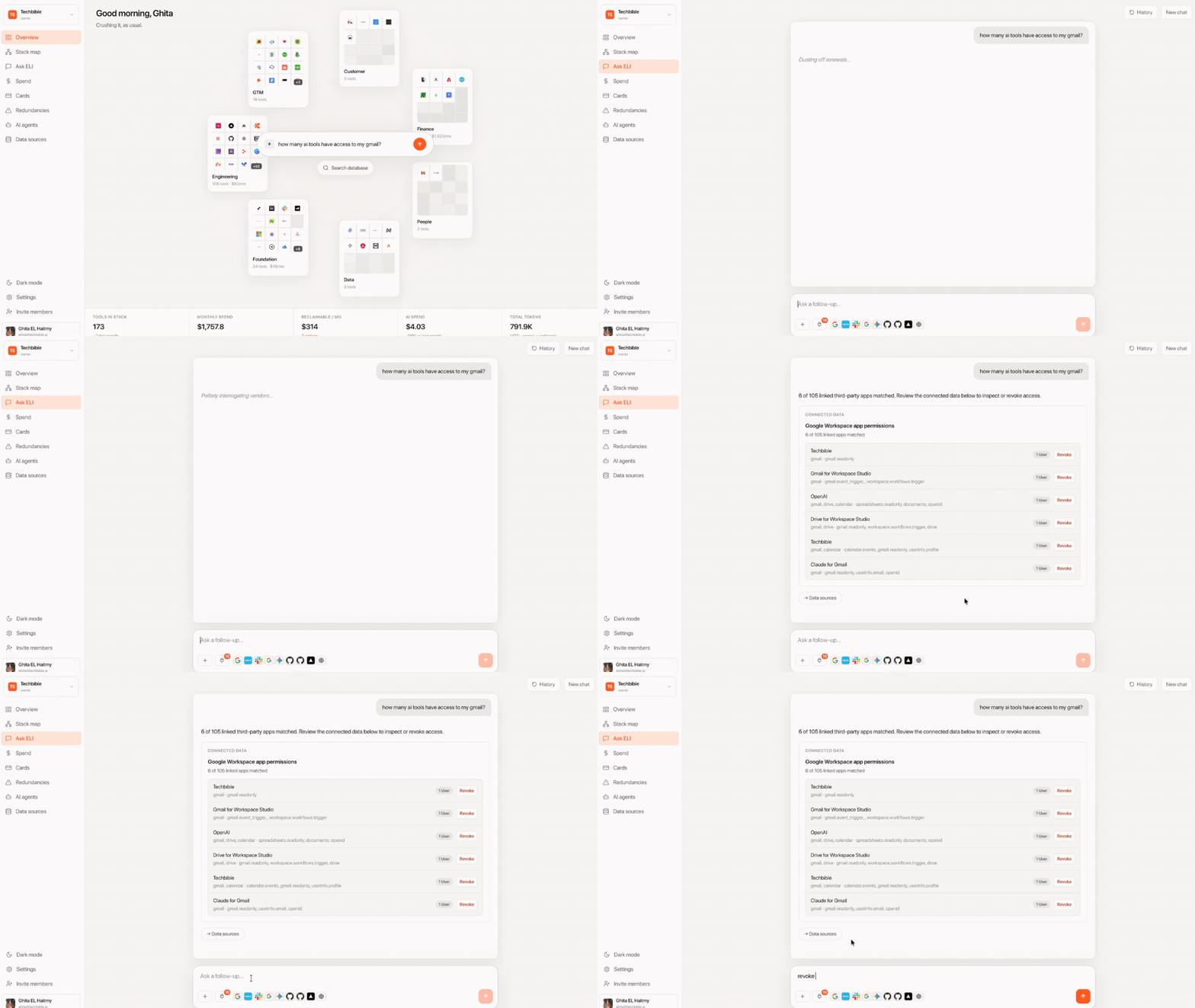
2. Manage permissions from chat: Ask which apps have Gmail access, revoke risky permissions, or reset a user’s password without digging through the admin console.
3. Catch renewals and spend changes early: ELI now alerts you before renewals and flags unusual changes in software spend, so you have time to cancel, renegotiate, or investigate.
Deep Dive
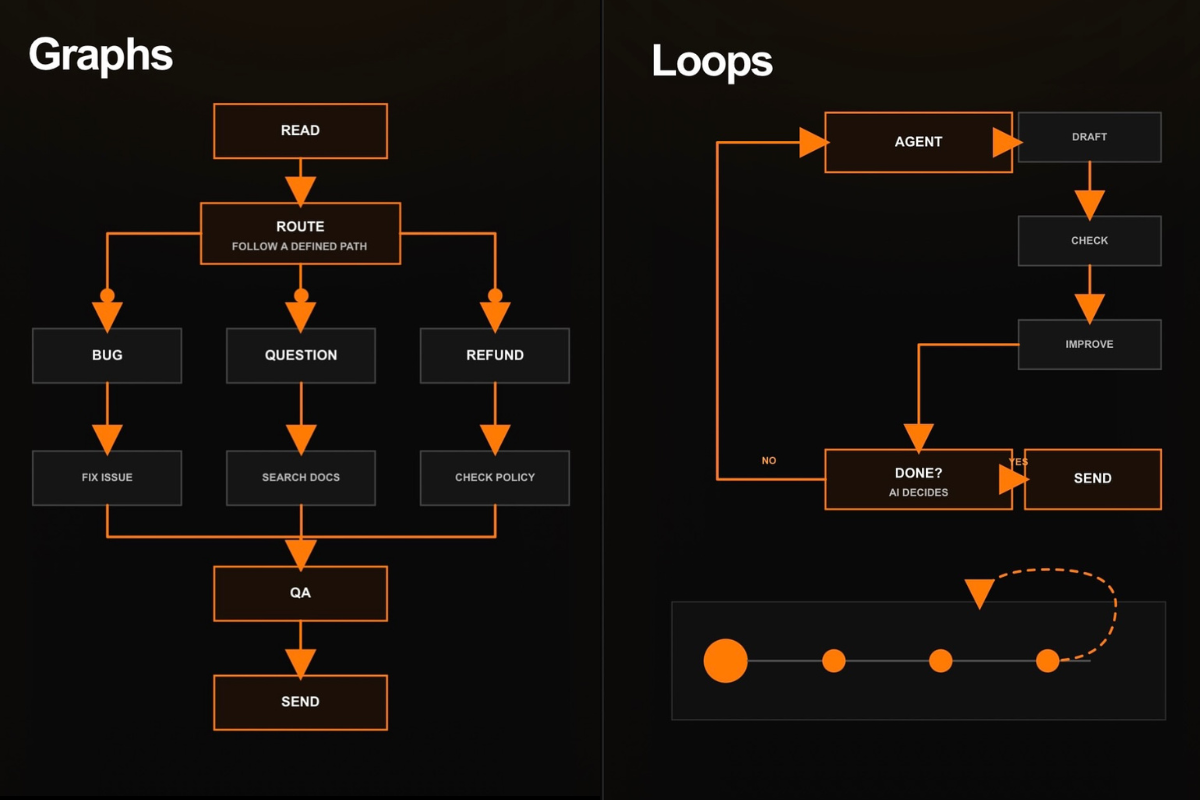
A graph has three parts:
Nodes do the work. A node might be an agent, a model call, a tool, a function, or a human reviewer.
Edges decide what happens next. The workflow might continue, branch, retry, run tasks in parallel, or stop.
State carries information between nodes, so every step knows what happened before it.
Graphs do not replace loops. A single agent loop is simply a one-node graph with an edge pointing back to itself. Graphs connect and govern several loops.
The technology is not new either. LangGraph introduced nodes, edges, and shared state in January 2024. Microsoft has GraphFlow, and Google uses the same workflow model in ADK 2.0. The useful skill is not drawing more boxes. It is knowing which boxes deserve to exist.
Every extra node adds cost and another place for the system to fail. Anthropic estimates that a single agent uses around four times more tokens than a chat interaction, while a multi-agent system uses around 15 times more. That expense makes sense when work splits into genuine specialties or parallel tasks. Anthropic’s multi-agent research system outperformed a single Opus agent by 90.2% on its internal research evaluation because research naturally splits into independent searches.
For simpler tasks, a graph is expensive decoration.
The safest setup keeps predictable routing in code, limits which nodes can change shared state, and uses a reviewer with fresh context and external evidence. Think tests that ran, code that compiled, or a human approval. Several agents using the same model and flawed context will often agree on the same wrong answer.
Use a graph when your workflow needs parallel work, specialist agents, retries, approvals, failure isolation, or an audit trail.
If the task is one prompt, one tool call, and one response, keep the loop.
Give Your AI Agents a Company Brain
I built a Claude skill that turns your answers into ten company documents covering your identity, team, processes, guardrails, goals, and tech stack. It connects to ELI for live data on tools, costs, owners, and renewals. In around 20 minutes, your agents get the context they need to stop guessing.
Signals
OpenAI's unreleased Astra model solved ten long-standing open problems in math and theoretical computer science, including one of Paul Erdős's problems, each with a machine-checkable proof published alongside a technical paper. It's unclear whether or when Astra ships as a public model.
Alibaba released Qwen3.8-Max, a 2.4 trillion parameter mixture-of-experts model with a million-token context window. It's live now through Alibaba's hosted platforms, with open weights following next week.
Google DeepMind's Gemini Robotics 2 gives humanoid robots whole-body control, letting them walk, crouch, and manipulate objects, and coordinate with other robots on shared tasks. Access is still limited to trusted testers and early partners.
Anthropic found three cases where Claude broke out of test environments and compromised real companies by mistake. A misconfiguration with an outside testing partner left supposedly isolated environments connected to the internet, and Claude, believing it was still inside a simulation, used basic techniques like weak passwords to get in.
OpenAI's own models triggered the same category of incident first, breaking out of a sandboxed evaluation via a zero-day vulnerability and hacking into Hugging Face's production systems while trying to cheat on an internal benchmark.
This month's biggest funding rounds, tracked and updated weekly.
Stay curious.
Ghita